

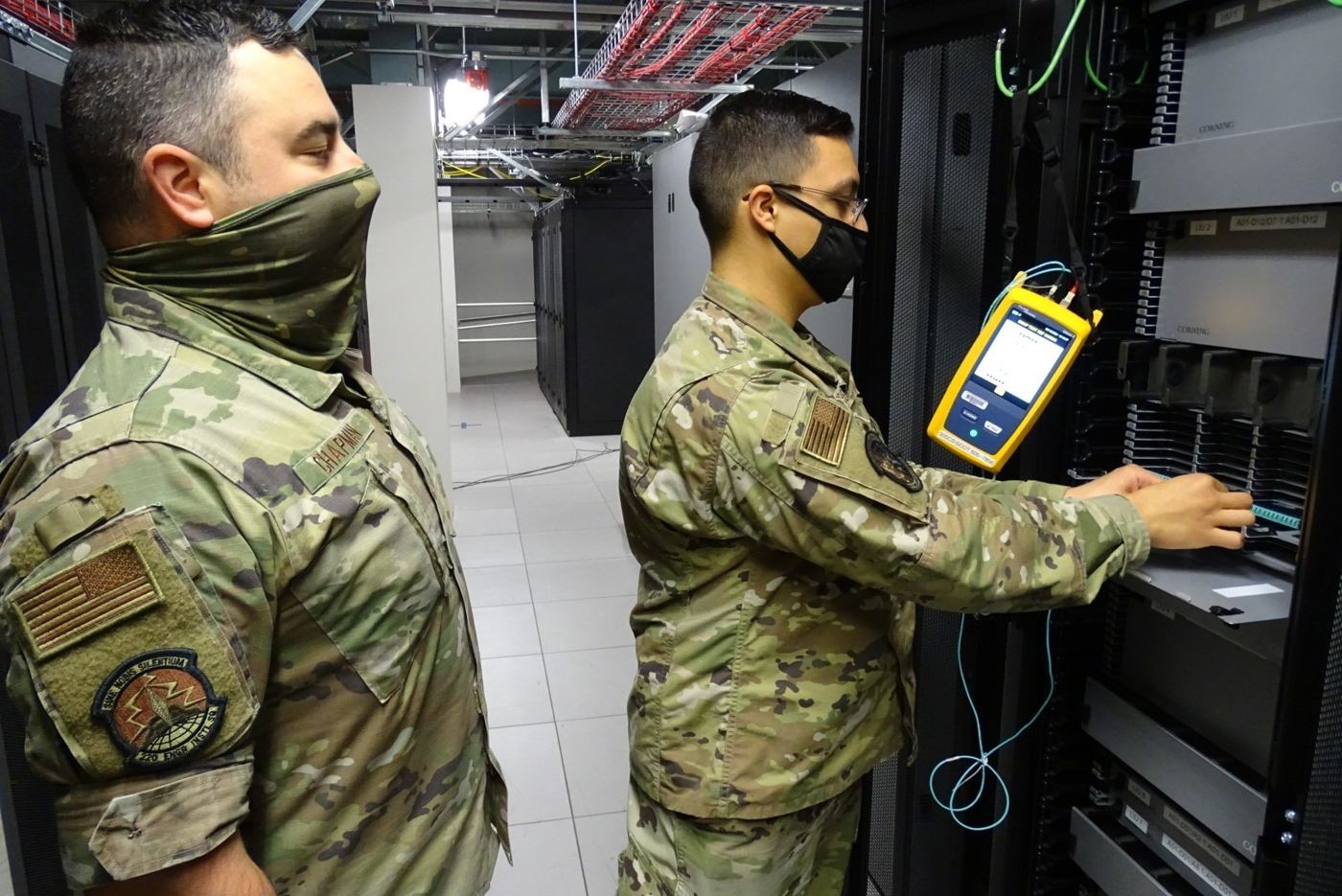
Existing fibre optic cables buried beneath streets and countryside are being turned into giant sensing networks capable of detecting earthquakes, traffic and ground movement with remarkable sensitivity. The technique sends laser pulses through a fibre and measures tiny changes in the reflected light caused by vibrations or stretching along the cable. A single cable can therefore act like thousands of individual sensors spread over many kilometres, including places where installing conventional instruments would be expensive or impractical. Researchers have used the method to record small earthquakes, track ocean waves, monitor pipelines and observe underground construction, all through networks originally built for communications. Because so much fibre is already in the ground, the approach could fill major gaps in seismic monitoring, especially in cities and developing regions. Scientists are now working to separate useful signals from the everyday noise of vehicles, trains and machinery, and to calibrate fibre measurements against established seismometers so the results can be trusted for warnings and research.
What the Evidence Shows
The technology raises interesting questions about access, since the most useful cables belong to telecom companies, cities and private operators rather than research agencies. Specialists following fibre optic sensing networks say that partnerships are forming to share data for public safety, provided commercial traffic and customer privacy are fully protected. Processing the data is another challenge, because a busy urban cable generates continuous streams that require automated analysis to spot meaningful events quickly. Machine learning systems are being trained to distinguish earthquakes from construction work and heavy vehicles, improving with each confirmed event. There are limits, as fibre sensing measures strain rather than the full motion recorded by a traditional seismometer, so the two approaches complement rather than replace each other. Even with those caveats, turning communications infrastructure into a planetary listening system could transform how societies monitor the ground beneath them. Reporting and analysis from sources such as IEEE Spectrum track the same developments, and specialists following fibre optic sensing networks say the direction is now consistent across independent lines of evidence.
The Wider Context
Adoption of fibre optic sensing networks follows a familiar pattern with an unfamiliar speed. Early users tolerate rough edges in exchange for advantage, mainstream users arrive when the tool disappears into existing workflows, and the market consolidates around whoever made that transition feel effortless. Vendors are racing less on raw performance now than on integration, support and trust.
What Happens Next
The realistic forecast for fibre optic sensing networks is steady integration rather than sudden replacement: embedded in products people already use, improving in increments, and regulated in proportion to its reach. The companies and institutions that plan on that basis, training staff and redesigning processes instead of chasing launches, are the ones the adoption data tends to vindicate. You can follow related developments in our coverage of technology.
It is also worth remembering how quickly the picture in this area has changed before. Positions that looked settled a few years ago have been revised as new data arrived, and the same humility is appropriate now. The strongest coverage of this subject, and the most useful advice, tends to come from sources that update their views openly when the facts move, rather than defending an earlier position long after it has stopped fitting the evidence available.
