

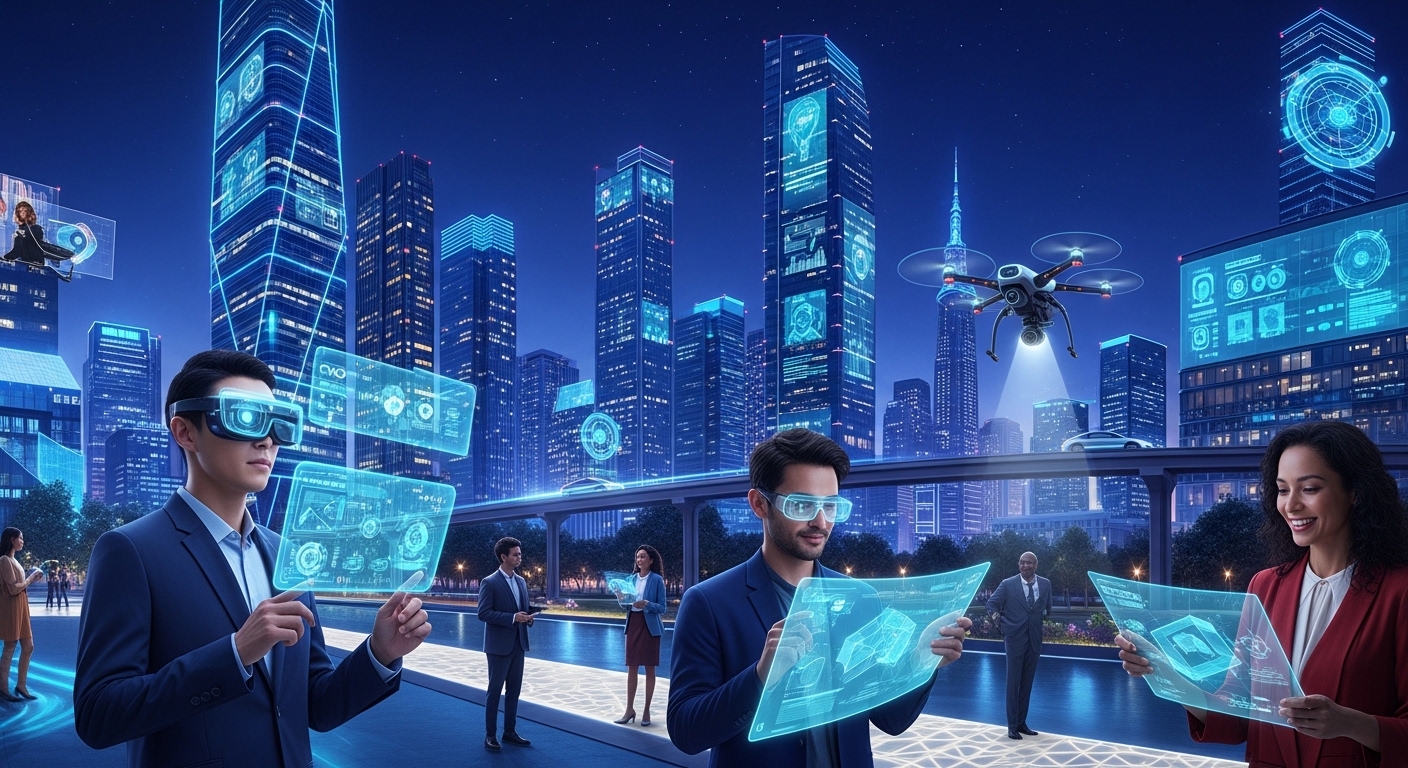
Modern technology is advancing at an incredible speed, transforming industries, improving daily life, and reshaping how humans interact with the world. From artificial intelligence to biotechnology and smart automation, innovations are driving a new digital era. These technologies are not only improving efficiency but also creating smarter solutions for global challenges in healthcare, business, education, and communication systems worldwide today.
Artificial Intelligence Transformation
AI Powered Smart Assistants Growth
AI powered smart assistants are becoming an essential part of modern life by helping users manage tasks, control devices, and access information quickly. These systems improve productivity, reduce effort, and provide personalized experiences. As AI continues to evolve, smart assistants will become more intelligent, responsive, and deeply integrated into everyday digital environments across homes and workplaces globally.
Machine Learning Decision Systems
Machine learning systems allow computers to analyze data, learn patterns, and make decisions without human intervention. These technologies are widely used in finance, healthcare, and business analytics. They help organizations predict trends, reduce risks, and improve accuracy. With continuous improvement, machine learning is becoming a core part of intelligent automation in modern digital ecosystems worldwide today.
Natural Language Processing Advances
Natural language processing enables machines to understand and respond to human language more effectively. This innovation powers chatbots, translation tools, and voice assistants. It improves communication between humans and machines, making digital interactions more natural and efficient. As this technology develops further, it will enhance global communication and accessibility across multiple languages and platforms worldwide.
AI Driven Automation Systems
AI driven automation is transforming industries by reducing manual work and increasing operational efficiency. Businesses use automation for customer service, manufacturing, and data processing. This technology saves time, reduces costs, and improves accuracy. In the future, AI automation will become more advanced, handling complex tasks and reshaping job roles across multiple sectors globally.
Predictive Analytics Technology
Predictive analytics uses AI to analyze historical data and forecast future outcomes. It is widely used in marketing, healthcare, and financial planning. This helps organizations make better decisions and reduce uncertainty. As data grows, predictive analytics will become even more powerful, offering deeper insights and improving strategic planning in various industries worldwide.
Internet of Things Expansion
Smart Home Device Integration
Smart home devices are connected through the Internet of Things, allowing users to control appliances remotely. These systems improve comfort, energy efficiency, and security. From smart lights to thermostats, IoT technology is making homes more intelligent and automated. Future advancements will create fully connected living environments with seamless digital control systems globally.
Industrial IoT Applications Growth
Industrial IoT is transforming manufacturing and production processes through real time monitoring and automation. Machines connected through networks improve efficiency and reduce downtime. This technology enhances productivity and supports predictive maintenance in factories. As industries adopt IoT solutions, operations become more efficient, cost effective, and highly automated across global production systems today.
Smart City Infrastructure Systems
Smart cities use IoT technology to manage traffic, energy, waste, and public services efficiently. Sensors and connected systems improve urban planning and reduce resource waste. This innovation enhances safety, reduces congestion, and improves quality of life for citizens. Smart city development is becoming a major focus in modern urban planning worldwide.
Connected Healthcare Devices
IoT based healthcare devices allow real time monitoring of patients through wearable technology. These devices track heart rate, oxygen levels, and other vital signs. Doctors can access patient data remotely, improving treatment efficiency and emergency response. This innovation is transforming healthcare systems into more proactive and connected digital environments globally.
Smart Agriculture Technologies
Smart agriculture uses IoT sensors to monitor soil, weather, and crop health. This helps farmers improve yield, reduce waste, and optimize resource usage. Automated irrigation and data driven farming techniques are increasing productivity. This technology is revolutionizing agriculture and supporting sustainable food production systems across the world.
Biotechnology and Medical Innovation
Gene Editing Technologies
Gene editing technologies like CRISPR are revolutionizing medicine by allowing scientists to modify DNA and treat genetic disorders. This innovation offers potential cures for diseases previously considered untreatable. It is advancing healthcare research and opening new possibilities in personalized medicine and biological engineering worldwide.
Personalized Medicine Development
Personalized medicine tailors treatment based on individual genetic makeup and health data. This improves treatment effectiveness and reduces side effects. It is transforming healthcare into a more precise and patient centered system. Advances in data analysis and biotechnology are making personalized healthcare more accessible globally.
Advanced Drug Discovery Systems
AI and biotechnology are speeding up drug discovery processes by analyzing biological data quickly. This reduces research time and improves medication development efficiency. Pharmaceutical companies are using these systems to create better treatments for diseases. This innovation is improving global healthcare outcomes significantly.
Bioengineering Tissue Growth
Bioengineering allows scientists to grow tissues and organs using biological materials and lab techniques. This technology helps in organ transplantation and medical research. It has the potential to save lives by reducing organ shortages and improving regenerative medicine solutions in healthcare systems worldwide.
Medical Robotics Innovation
Medical robots assist doctors in surgeries and complex procedures with high precision. These systems reduce human error and improve recovery outcomes. Robotics in healthcare is becoming more advanced, supporting minimally invasive surgeries and enhancing medical efficiency across hospitals globally.
Renewable Energy Technology
Solar Energy Efficiency Improvements
Solar technology is becoming more efficient with advanced photovoltaic systems that convert sunlight into electricity. These improvements reduce energy costs and support clean energy adoption. Solar power is playing a key role in reducing environmental pollution and promoting sustainable energy solutions worldwide.
Wind Power Generation Systems
Wind energy systems use turbines to generate electricity from wind power. This renewable source is environmentally friendly and widely used in many countries. Advances in turbine technology are increasing energy output and making wind power a reliable alternative to fossil fuels.
Smart Energy Grid Systems
Smart grids use digital technology to manage electricity distribution efficiently. They balance energy supply and demand in real time. This improves reliability and reduces energy waste. Smart grids are essential for modern renewable energy integration and sustainable power systems.
Electric Vehicle Charging Networks
EV charging infrastructure is expanding rapidly to support electric vehicles worldwide. Fast charging stations and smart energy management systems are improving convenience. This development is encouraging the adoption of electric vehicles and reducing dependence on fossil fuels.
Battery Storage Innovations
Advanced battery technology is improving energy storage capacity and efficiency. These innovations support renewable energy systems by storing excess power for later use. Better batteries are essential for electric vehicles and sustainable energy solutions.
Space Technology Advancement
Satellite Communication Systems
Satellites play a crucial role in global communication, navigation, and weather forecasting. Modern satellites provide high speed internet and global connectivity. This technology is improving communication systems and supporting remote areas worldwide.
Space Exploration Missions
Space agencies are launching advanced missions to explore planets, moons, and deep space. These missions help expand scientific knowledge and technological development. Space exploration is opening new possibilities for humanity’s future beyond Earth.
Reusable Rocket Technology
Reusable rockets reduce the cost of space travel by allowing multiple launches with the same rocket. This innovation is making space exploration more affordable and efficient for governments and private companies.
Space Tourism Development
Space tourism is emerging as a new industry, allowing civilians to travel beyond Earth. Companies are developing commercial space travel systems for future tourism experiences in space.
Astronomical Research Tools
Advanced telescopes and space instruments are helping scientists study galaxies, stars, and cosmic phenomena. These tools improve understanding of the universe and support scientific discovery.
Cybersecurity Innovations
Advanced Encryption Systems
Encryption technology protects sensitive data from cyber threats by converting information into secure codes. This is essential for digital privacy and secure communication systems.
AI Based Threat Detection
AI systems identify cyber threats in real time by analyzing network activity. This helps prevent hacking and data breaches more effectively.
Blockchain Security Applications
Blockchain technology provides secure and transparent digital transactions. It is widely used in finance, supply chains, and data protection systems.
Cloud Security Solutions
Cloud security systems protect stored data from unauthorized access and cyber attacks. These solutions are essential for modern digital businesses.
Identity Protection Systems
Identity protection technologies prevent fraud and secure personal information in digital environments. They improve online safety for users worldwide.
Future Digital Innovations
Quantum Computing Development
Quantum computing will revolutionize data processing by solving complex problems much faster than traditional computers. It has huge potential in science and technology.
Augmented Reality Integration
Augmented reality blends digital content with real world environments, improving gaming, education, and training experiences.
6G Network Technology
6G networks will provide even faster connectivity than 5G, enabling advanced digital communication systems in the future.
Human Machine Interface Systems
These systems allow direct interaction between humans and machines, improving control and communication in digital environments.
Smart Digital Ecosystems
Future ecosystems will integrate AI, IoT, and automation to create fully connected intelligent environments globally.
FAQs
What are the top technology innovations today?
AI, IoT, biotechnology, renewable energy, and space technology are leading innovations.
How is AI changing modern life?
AI improves automation, communication, healthcare, and decision making systems.
What is the future of technology?
The future includes smarter automation, quantum computing, and advanced digital systems.
Why is IoT important?
IoT connects devices and improves efficiency in homes, cities, and industries.
How does technology impact daily life?
It improves convenience, communication, productivity, and access to services.
Conclusion
Modern technology innovations are transforming the world by improving efficiency, connectivity, and problem solving capabilities across all sectors. From artificial intelligence and biotechnology to renewable energy and space exploration, these advancements are shaping a smarter future. As technology continues to evolve, it will create more opportunities, improve living standards, and redefine how humans interact with the digital world globally.