

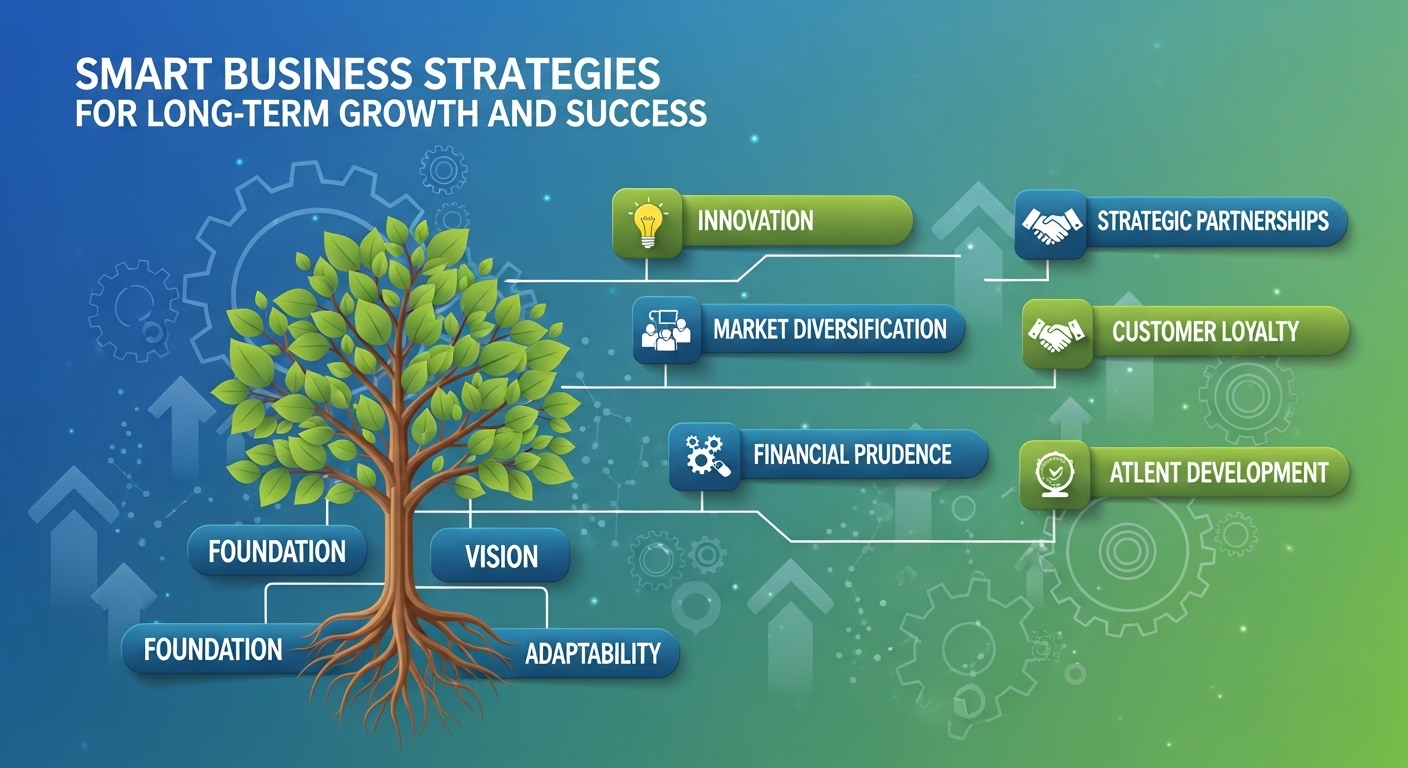
In today’s competitive world, long-term business success depends on smart planning, adaptability, and consistent improvement. Businesses that focus only on short-term profit often struggle to survive, while those that invest in strategy, innovation, and customer relationships achieve sustainable growth. In 2026, digital transformation and data-driven decision-making are essential for building strong and future-ready businesses globally.
Strategic Business Planning
Clear Long Term Vision
A clear long-term vision helps businesses define their direction and future goals. It provides clarity for decision-making and ensures that all efforts align with growth objectives. Without a strong vision, companies often lose focus and fail to scale effectively in competitive markets.
Goal Oriented Planning
Setting specific and measurable goals allows businesses to track progress and improve performance. Clear goals help teams stay focused, increase productivity, and achieve consistent results over time. This structured approach supports sustainable business expansion.
Market Research Analysis
Understanding market trends, customer needs, and competitor strategies is essential for smart planning. Market research helps businesses identify opportunities, reduce risks, and make informed decisions that improve long-term success.
Risk Management Strategy
Risk management involves identifying potential threats and preparing solutions in advance. Businesses that manage risks effectively can handle uncertainties and maintain stability during economic or market changes.
Resource Optimization
Efficient use of financial, human, and technical resources improves productivity and reduces waste. Proper resource management ensures long-term profitability and operational efficiency.
Customer Focus Strategies
Customer Satisfaction Priority
Customer satisfaction is the foundation of long-term business success. Happy customers build trust, loyalty, and repeat business, which leads to stable revenue growth.
Personalized Customer Experience
Personalized services improve customer engagement by offering tailored solutions based on individual needs. This strengthens relationships and increases customer retention.
Feedback Improvement System
Collecting customer feedback helps businesses identify weaknesses and improve products or services continuously. It ensures better alignment with customer expectations.
Loyalty Programs Development
Loyalty programs encourage repeat purchases by offering rewards and benefits. This helps businesses retain customers and increase lifetime value.
Strong Customer Support
Reliable and fast customer support builds trust and improves brand reputation. It also helps resolve issues quickly, increasing customer satisfaction.
Financial Growth Management
Budget Planning Control
Proper budgeting helps businesses manage expenses and allocate resources effectively. It ensures financial stability and prevents overspending.
Profit Reinvestment Strategy
Reinvesting profits into marketing, innovation, and expansion helps businesses grow faster and become more competitive.
Cash Flow Management
Maintaining healthy cash flow ensures smooth daily operations and financial stability. It prevents business disruptions and supports growth.
Cost Reduction Methods
Reducing unnecessary expenses increases profitability without affecting quality. Efficient cost management improves long-term financial strength.
Investment Diversification
Diversifying investments reduces financial risk and increases opportunities for higher returns in different markets.
Digital Transformation Strategy
Online Presence Development
A strong online presence helps businesses reach global audiences and increase brand visibility in digital markets.
Social Media Marketing
Social media platforms allow businesses to connect with customers, promote products, and build brand awareness effectively.
SEO Optimization Strategy
Search engine optimization improves website visibility and helps attract organic traffic from search engines.
E Commerce Growth
Online selling platforms expand business reach and increase revenue opportunities beyond local markets.
Data Driven Decisions
Using data analytics helps businesses understand performance trends and make smarter strategic decisions.
Innovation and Adaptability
Product Innovation Focus
Innovating products helps businesses stay competitive and meet changing customer demands effectively.
Technology Integration
Using modern technology improves efficiency, reduces costs, and enhances business performance.
Market Trend Adaptation
Adapting to changing trends ensures businesses remain relevant in fast evolving markets.
Creative Problem Solving
Creative thinking helps businesses overcome challenges and find effective solutions quickly.
Continuous Improvement Culture
Regular improvement ensures long-term growth and business sustainability.
Leadership and Team Development
Strong Leadership Skills
Effective leadership guides teams, improves decision-making, and drives business success.
Employee Training Programs
Training improves employee skills, productivity, and overall company performance.
Team Collaboration Strength
Strong teamwork improves communication, efficiency, and workplace productivity.
Performance Evaluation Systems
Regular evaluations help identify strengths and areas for improvement.
Employee Motivation Growth
Motivated employees contribute more effectively to business success and innovation.
Competitive Market Strategy
Market Positioning Strategy
Clear positioning helps businesses stand out from competitors and attract target customers.
Competitive Pricing Strategy
Smart pricing helps balance affordability and profitability in competitive markets.
Brand Reputation Building
A strong reputation builds customer trust and long-term loyalty.
Strategic Partnerships
Partnerships help businesses expand, share resources, and enter new markets.
Industry Monitoring Trends
Monitoring industry trends helps businesses stay ahead of competition.
FAQs
What is a smart business strategy?
It is a structured plan that helps achieve long-term growth and success.
Why is customer focus important?
Because satisfied customers create loyalty and repeat business.
How can businesses grow long term?
Through planning, innovation, and digital transformation.
Why is financial management important?
It ensures stability, profitability, and sustainable growth.
What role does technology play in business?
It improves efficiency, marketing, and decision-making.
Conclusion
Smart business strategies are essential for achieving long-term growth and success in today’s competitive environment. By focusing on planning, customer satisfaction, financial control, innovation, and digital transformation, businesses can build strong foundations for sustainable development. Consistency, adaptability, and smart decision-making ensure that businesses not only survive but also thrive in the future global economy.