

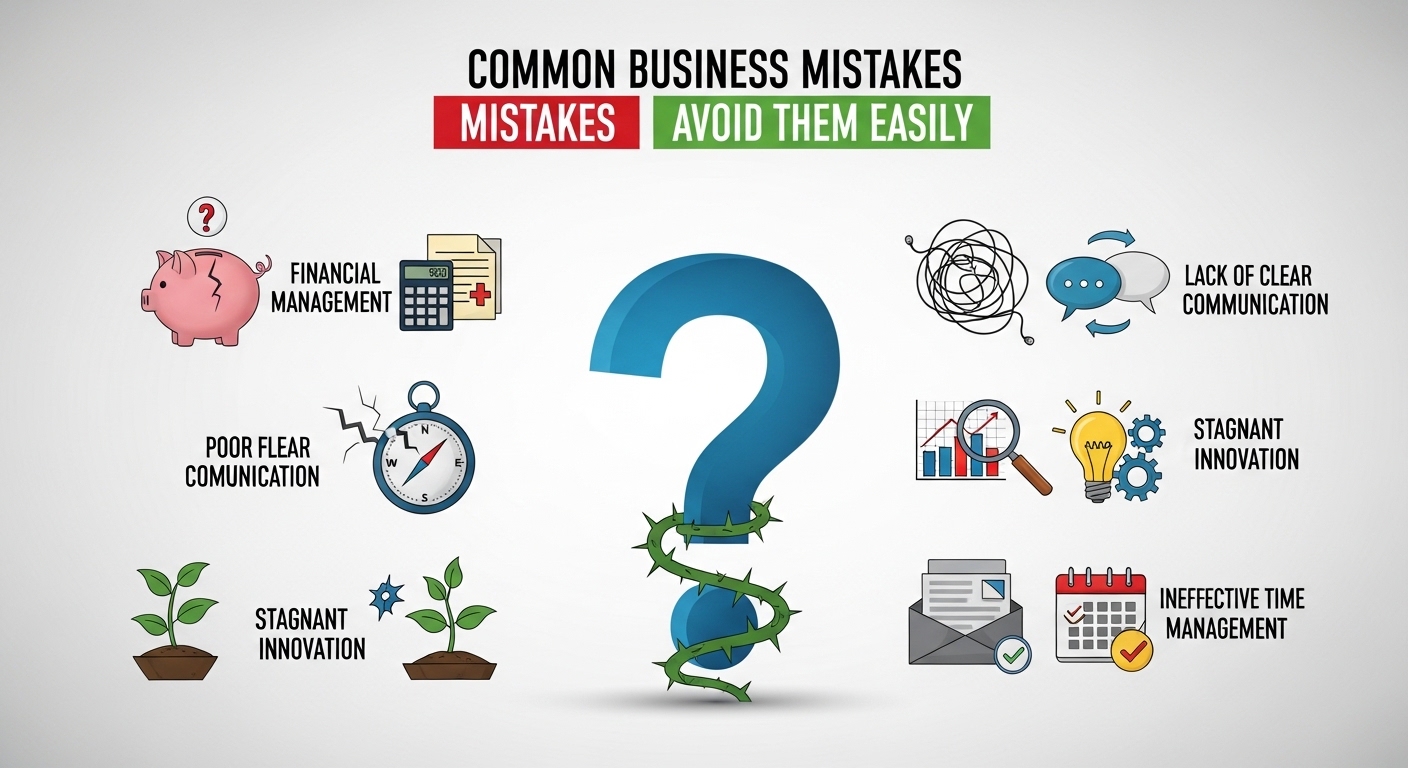
Running a business can be exciting, but many entrepreneurs face challenges because of avoidable mistakes. These errors often slow growth, reduce profits, and sometimes even lead to failure. Understanding common business mistakes and learning how to prevent them helps owners make smarter decisions, build stronger strategies, and achieve long term success in competitive markets. Good planning and awareness are the keys to stable business growth.
Poor Financial Management Practices
Lack of Budget Planning Discipline
Many businesses fail because they do not create or follow a proper budget plan. Without budgeting, it becomes difficult to track expenses and control cash flow. A clear budget helps business owners allocate resources wisely, avoid overspending, and maintain financial stability. Proper financial planning ensures smooth operations and long term profitability in any business environment.
Ignoring Cash Flow Monitoring
Cash flow is the lifeline of any business, but many owners fail to monitor it regularly. Ignoring cash inflows and outflows can lead to unexpected shortages. Regular tracking helps businesses understand financial health and avoid payment delays. Proper cash flow management ensures that daily operations run smoothly without financial stress or disruption.
Overspending on Unnecessary Expenses
Businesses often waste money on non essential expenses such as luxury offices, unneeded tools, or excessive marketing. This reduces available capital for important operations. Smart spending focuses only on essential needs and growth activities. Controlling unnecessary expenses helps improve profitability and ensures long term financial sustainability for the business.
Poor Investment Decision Making
Many entrepreneurs invest money without proper research or analysis, leading to financial loss. Poor investment decisions can harm business stability and growth potential. Careful evaluation of risks, returns, and market conditions is necessary before investing. Smart investment planning helps businesses grow safely and avoid unnecessary financial risks.
Lack of Emergency Financial Planning
Unexpected problems like market changes or economic downturns can affect businesses severely if there is no backup plan. Many businesses fail due to lack of emergency funds. Setting aside financial reserves ensures stability during difficult times and protects business operations from sudden disruptions or losses.
Weak Business Planning Strategy
No Clear Business Vision
A business without a clear vision lacks direction and purpose. This leads to confusion in decision making and poor long term growth. A strong vision helps guide strategies, improve focus, and align all efforts toward achieving success. Clear goals are essential for building a successful and sustainable business.
Poor Market Research Understanding
Many businesses fail because they do not understand their market properly. Without research, it becomes difficult to identify customer needs and competition. Proper market analysis helps businesses create better products, improve services, and stay competitive in changing environments.
Weak Business Model Structure
A weak business model leads to confusion in operations and revenue generation. A strong model defines how a business creates, delivers, and earns value. Without it, growth becomes unstable and unpredictable. A solid structure ensures long term success and clarity in business operations.
Ignoring Competitor Analysis
Ignoring competitors can result in missed opportunities and poor strategy development. Understanding competitors helps businesses identify strengths, weaknesses, and market gaps. This knowledge allows better decision making and improved business positioning in the market.
Lack of Growth Strategy Planning
Without a clear growth strategy, businesses struggle to expand and improve. Planning for future growth ensures better scalability and success. A strong strategy helps businesses stay ahead of competition and achieve long term objectives.
Poor Customer Relationship Management
Ignoring Customer Feedback
Customer feedback is essential for improving products and services. Ignoring it leads to dissatisfaction and loss of customers. Listening to customers helps businesses understand their needs and improve overall quality.
Weak Customer Support System
Poor customer support reduces trust and damages brand reputation. Fast and helpful responses improve customer satisfaction. A strong support system builds loyalty and long term relationships with clients.
Lack of Personalization Strategy
Customers expect personalized experiences from modern businesses. Ignoring personalization reduces engagement and loyalty. Tailored services improve customer satisfaction and increase repeat business.
Delayed Response to Complaints
Slow responses to customer complaints can harm business reputation. Quick resolution builds trust and improves customer relationships. Efficient complaint handling is essential for success.
Ignoring Customer Retention Efforts
Many businesses focus only on acquiring new customers and ignore existing ones. Retaining customers is more cost effective and increases long term revenue. Loyalty programs and engagement strategies help improve retention.
Ineffective Marketing Approaches
Poor Branding Strategy
A weak branding strategy makes it difficult for customers to recognize a business. Strong branding builds trust, identity, and market presence. Consistent branding improves customer awareness and business growth.
Ignoring Digital Marketing Trends
Modern businesses must adapt to digital marketing channels. Ignoring online platforms reduces visibility and customer reach. Digital marketing helps businesses grow faster and connect with wider audiences.
Lack of Content Strategy
Content is important for attracting and engaging customers. Without a content strategy, businesses fail to communicate effectively. Valuable content builds trust and improves brand authority.
Inefficient Advertising Campaigns
Poorly planned ads waste money and fail to attract customers. Effective campaigns target the right audience and improve conversion rates. Proper planning increases marketing success.
Not Using Social Media Properly
Social media is a powerful marketing tool, but many businesses misuse it. Proper usage increases engagement, visibility, and brand awareness. Consistent posting and interaction are essential.
Operational and Management Errors
Poor Time Management Skills
Time management is critical for business success. Poor planning leads to delays and reduced productivity. Proper scheduling improves efficiency and performance.
Weak Team Management Structure
A poorly managed team leads to confusion and reduced productivity. Strong leadership improves coordination, motivation, and performance. Effective management ensures smooth operations.
Lack of Employee Training Programs
Employees need proper training to perform effectively. Without training, productivity decreases and errors increase. Training improves skills and business efficiency.
Inefficient Workflow Processes
Unorganized workflows slow down business operations. Efficient processes improve productivity and reduce errors. Proper systems ensure smooth business performance.
Poor Decision Making Process
Quick but poorly thought decisions can harm business growth. Careful analysis improves decision quality and reduces risks. Strong decision making supports success.
Legal and Compliance Mistakes
Ignoring Business Regulations
Failing to follow legal rules can result in penalties or shutdowns. Compliance ensures safe and lawful operations.
Lack of Proper Documentation
Proper documentation protects businesses from legal disputes. Organized records improve transparency and accountability.
Not Understanding Tax Obligations
Ignoring taxes leads to financial and legal issues. Proper tax planning ensures compliance and stability.
Weak Contract Management
Poor contracts can cause misunderstandings and losses. Clear agreements protect business interests.
Ignoring Intellectual Property Rights
Not protecting intellectual property can lead to misuse or loss of ideas. Proper protection ensures business security.
Growth and Scaling Mistakes
Expanding Too Quickly
Rapid expansion without planning can cause financial instability. Controlled growth ensures long term success.
Ignoring Market Demand Changes
Markets change frequently, and ignoring trends leads to loss of relevance. Adapting ensures competitiveness.
Lack of Innovation Focus
Without innovation, businesses become outdated. Continuous improvement is essential for growth.
Poor Resource Allocation
Misusing resources reduces efficiency and profitability. Proper allocation improves performance.
Weak Performance Monitoring
Not tracking performance leads to missed opportunities. Monitoring helps improve business decisions.
FAQs
What is the most common business mistake?
Poor financial management and lack of planning are the most common mistakes.
How can businesses avoid failure?
By proper planning, market research, and strong financial control.
Why do small businesses fail?
Due to cash flow issues, poor strategy, and weak customer management.
Is marketing important for business success?
Yes, effective marketing increases visibility and customer growth.
How can businesses grow safely?
Through planning, research, innovation, and controlled expansion.
Conclusion
Common business mistakes can slow growth, reduce profits, and harm long term success, but they can be easily avoided with proper planning and awareness. Strong financial management, customer focus, effective marketing, and smart decision making are key to success. By learning from these mistakes and applying better strategies, businesses can grow steadily and achieve long lasting stability in competitive markets.