

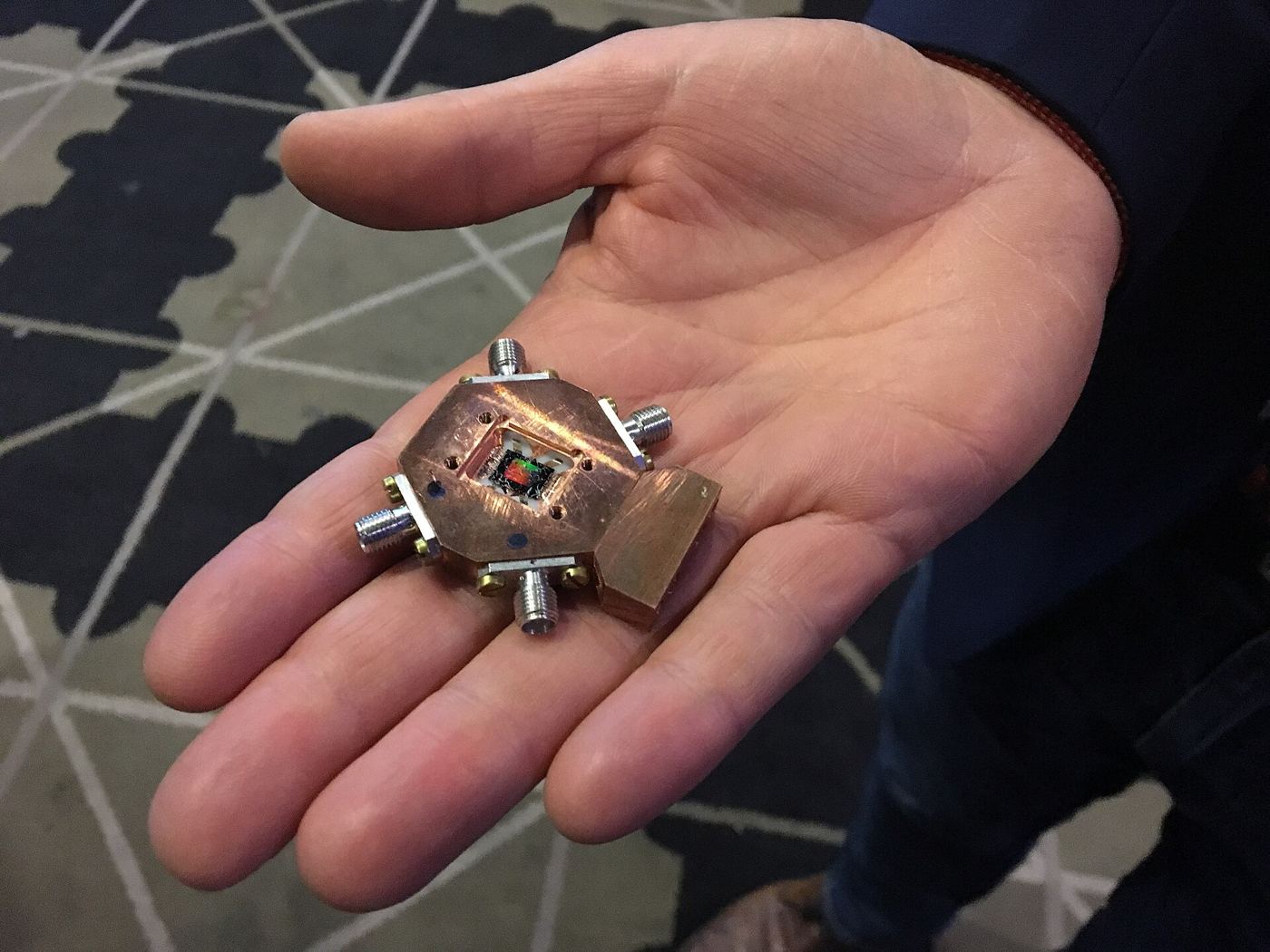
QuEra Computing and Lawrence Berkeley National Laboratory have published a study in Nature of quantum dynamics on up to 180 qubits, using QuEra’s Aquila neutral-atom quantum computer coupled with classical calculations on the Perlmutter supercomputer. The team observed new physical phenomena, specifically how a quantum system settles after a sudden change. Classical simulation of these phenomena in large systems scales poorly, because quantum entanglement grows fast with evolution time. A programmable quantum computer sidesteps this by using the quantum states of atomic qubits to model the target system. The paper is the latest peer-reviewed result in a long collaboration between the Department of Energy’s National Labs and QuEra, and a team from Los Alamos National Laboratory and QuEra published results on a new quantum error correction architecture earlier this year.
What the Evidence Shows
On Aquila, atomic qubits start in their lowest-energy state, a laser field switches on, the atoms evolve for a few millionths of a second, and every qubit is measured. Repeated across chains of up to 52 atoms and two-dimensional grids of up to 180, the work produced three results: long-lived intermediate states known as prethermalisation, resonant melting at sharp predictable points, and a two-dimensional transition with no equilibrium counterpart. Calculations on Perlmutter gave the team confidence in Aquila’s results at small scales, so they could trust the new physics revealed at larger ones. The study was co-designed by QuEra and NERSC scientists, with NERSC running exact classical calculations on Perlmutter for small probing systems, and those results were used to construct the quantum computer experiments that followed. Reporting and analysis from sources such as IEEE Spectrum track the same developments, and specialists following the QuEra Aquila 180-qubit quantum study say the direction is now consistent across independent lines of evidence.
The Wider Context
Adoption of the QuEra Aquila 180-qubit quantum study follows a familiar pattern with an unfamiliar speed. Early users tolerate rough edges in exchange for advantage, mainstream users arrive when the tool disappears into existing workflows, and the market consolidates around whoever made that transition feel effortless. Vendors are racing less on raw performance now than on integration, support and trust.
What Happens Next
The realistic forecast for the QuEra Aquila 180-qubit quantum study is steady integration rather than sudden replacement: embedded in products people already use, improving in increments, and regulated in proportion to its reach. The companies and institutions that plan on that basis, training staff and redesigning processes instead of chasing launches, are the ones the adoption data tends to vindicate. You can follow related developments in our coverage of technology.
It is also worth remembering how quickly the picture in this area has changed before. Positions that looked settled a few years ago have been revised as new data arrived, and the same humility is appropriate now. The strongest coverage of this subject, and the most useful advice, tends to come from sources that update their views openly when the facts move, rather than defending an earlier position long after it has stopped fitting the evidence available.
